
PDFEnrich · One-megabyte PDF guide
How to compress a PDF to 1 MB without pretending every file can fit
A 1 MB target is a hard byte budget, not a quality setting. Measure the starting file, preserve structure first, and split the document when acceptable quality cannot fit the limit.
Reviewed July 29, 2026 by PDFEnrich Product Engineering.
Compress toward 1 MBWorked product example: Reduce an image-heavy application packet
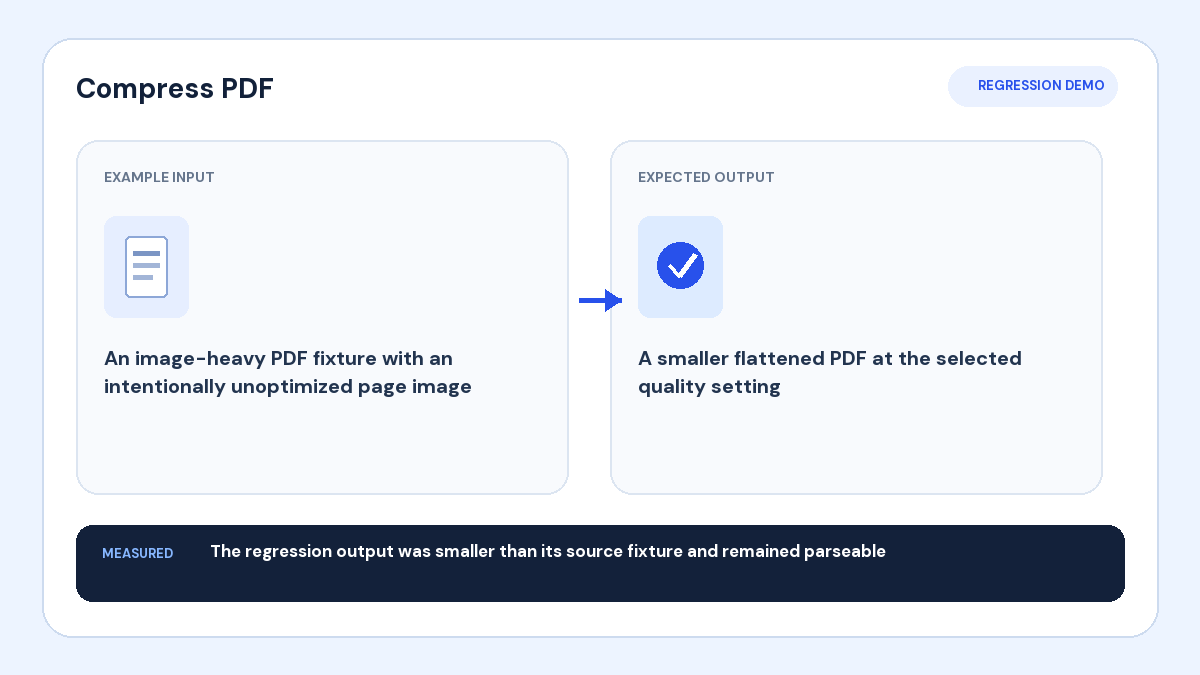
Input: A multi-page application must fit a portal that rejects files over 1 MB.
Action: Try structure-preserving compression, inspect the measured result, then use stronger reduction only on a separate delivery copy.
Verified result: The correct outcome is either a verified PDF below the portal limit or an honest decision to split the packet.
1. Confirm what the portal means by 1 MB
Some systems use 1,000,000 bytes and others use 1 MiB, or 1,048,576 bytes. Aim slightly below the displayed limit because upload systems may apply their own message or metadata overhead. Record the original size before changing anything.
2. Preserve document structure first
Use Lossless cleanup or Balanced when selectable text, links, form fields, vectors, or accessibility structure matter. These modes may produce modest savings on text-heavy or already optimized PDFs, but they avoid turning every page into a photograph.
3. Use stronger reduction only when appropriate
Maximum reduction can help image-heavy scans by rendering lower-quality page images. It removes interactive and searchable structure and can soften small text, signatures, diagrams, and fine lines. Always apply it to a copy and inspect representative pages.
4. Split instead of destroying readability
If the result remains above 1 MB at acceptable quality, split the document into clearly named parts when the recipient allows multiple uploads. Reopen every output, check page count and order, and never replace the source with a blurry delivery copy.